India
See what's happening
Browse topics · 32
India
Basic informationOpen ↗
| Attribute | Details | | :--- | :--- | | Official Name | Republic of India | | Common Name | India | | Native Name(s) | Bhārat, Bhārat Gaṇarājya | | Nicknames | The Subcontinent, The Jewel in the Crown (historical) | | Motto | Satyameva Jayate ("Truth Alone Triumphs") | | Geographic Level | Country | | Country | India | | State/Province | 28 States, 8 Union Territories | | Capital | New Delhi | | Government Type | Federal parliamentary constitutional republic | | Date Founded | August 15, 1947 (Independence), January 26, 1950 (Republic) | | Time Zone | Indian Standard Time (UTC+05:30) | | Latitude | 20.5937° N | | Longitude | 78.9629° E | | Elevation | Varies from sea level to 8,586 m (28,169 ft) | | Total Area | 3,287,263 sq km (1,269,219 sq mi) | | Population | ~1.44 billion (2024 estimate) | | Population Density | ~438 people per sq km (1,134 per sq mi) | | ZIP/Postal Codes | PIN (Postal Index Number) codes (6 digits) | | Area Codes | +91 (Country Code) | | Official Languages | Hindi, English (at the national level); 22 scheduled languages | | Currency | Indian Rupee (INR, ₹) | | Demonym | Indian
OverviewOpen ↗
India is a vast and vibrantly diverse South Asian nation, occupying the majority of the Indian subcontinent. As the world's most populous country and its largest democracy, India holds a remarkably influential place on the global stage. It is a land of striking contrasts—where ancient temples and centuries-old traditions thrive alongside booming technology hubs, space exploration programs, and a rapidly expanding modern economy.
Known for its profound cultural heritage, India is the birthplace of four major world religions: Hinduism, Buddhism, Jainism, and Sikhism. Its contributions to art, philosophy, mathematics, and science trace back millennia. Today, it is celebrated for its dynamic cinema (Bollywood and regional film industries), rich culinary traditions, and a highly skilled diaspora that shapes global industries.
In recent years, India has emerged as a major economic powerhouse, driven by a youthful demographic and a robust services sector. Whether navigating the snow-capped peaks of the Himalayas, the lush backwaters of Kerala, or the bustling streets of Mumbai, visitors and residents alike experience a country defined by its resilience, its kaleidoscopic culture, and its steady march toward the future.
HistoryOpen ↗
India's history is one of the oldest and most complex in the world, beginning with the Indus Valley Civilization (c. 3300–1300 BCE), known for its advanced urban planning. This was followed by the Vedic Period, which laid the foundations of Hinduism and saw the composition of the Vedas. Over the ensuing millennia, the subcontinent was unified by several great empires, notably the Maurya Empire under Ashoka the Great, who championed Buddhism and non-violence, and the Gupta Empire, widely regarded as India's "Golden Age" of science, art, and mathematics.
During the medieval period, India saw the rise of powerful regional kingdoms and the arrival of Islamic rule, culminating in the Delhi Sultanate and later the magnificent Mughal Empire, which left an indelible mark on Indian architecture (most famously the Taj Mahal), cuisine, and culture. In the 18th century, the British East India Company gradually established political and economic control, which eventually transitioned to direct rule by the British Crown (the British Raj) in 1858.
India's modern history was forged in the crucible of its independence movement, distinguished by Mahatma Gandhi's philosophy of non-violent resistance (*Satyagraha*). India finally achieved independence on August 15, 1947, though the victory was accompanied by the tragic partition of the subcontinent into India and Pakistan. On January 26, 1950, India adopted its constitution, becoming a sovereign republic. Since then, India has navigated multiple wars (primarily with Pakistan and China), implemented sweeping economic reforms in 1991 that opened its markets to the world, and transformed into a major global economic and technological player.
GeographyOpen ↗
Occupying a central position in South Asia, India shares land borders with Pakistan to the west; China, Nepal, and Bhutan to the north; and Bangladesh and Myanmar to the east. It is bounded by the Indian Ocean on the south, the Arabian Sea on the southwest, and the Bay of Bengal on the southeast, giving it a vast coastline of over 7,500 kilometers.
India's physical geography is defined by three main regions: the rugged, towering Himalayan mountains in the north; the fertile Indo-Gangetic Plain, which is nourished by major river systems like the Ganges (Ganga), Brahmaputra, and Indus; and the expansive Deccan Plateau in the south. The country also features the arid Thar Desert in the northwest and rich tropical forests in the northeast and along the southern coasts.
This immense geographic diversity endows India with abundant natural resources, including coal, iron ore, manganese, mica, bauxite, rare earth elements, and significant arable land. It also creates a rich habitat for biodiversity, supporting numerous national parks and wildlife sanctuaries that harbor tigers, elephants, leopards, and countless bird species.
TopographyOpen ↗
India's topography is one of extremes. The highest point is Kangchenjunga in the state of Sikkim, towering at 8,586 meters (28,169 feet)—the third highest mountain in the world. The lowest point is Kuttanad in Kerala, lying roughly 2.2 meters (7.2 feet) below sea level, famous for its intricate backwater farming systems.
The subcontinent's terrain is framed by the Himalayas to the north and the Eastern and Western Ghats—two long mountain ranges that run parallel to the eastern and western coasts, respectively, enclosing the Deccan Plateau. The topography features vast flood plains formed by the Ganges and Brahmaputra rivers, which are some of the most densely populated and agriculturally productive lands on Earth. Additionally, India comprises two major archipelagos: the Andaman and Nicobar Islands in the Bay of Bengal, and the Lakshadweep Islands in the Arabian Sea.
Weather & climateOpen ↗
India's climate is heavily influenced by the Himalayas and the Thar Desert, both of which drive the crucial summer monsoons. The Köppen climate classification varies wildly, encompassing alpine tundra and glaciers in the north, arid deserts in the west, and tropical rainforests in the southwest and island territories.
The country generally experiences four distinct seasons: Winter (December to February), Summer (March to May), Monsoon (June to September), and Post-Monsoon (October to November). Average temperatures range from freezing in the northern mountains to sweltering highs exceeding 45°C (113°F) in the northern plains during summer.
The southwest monsoon provides over 75% of India's annual rainfall, a lifeline for its agriculture. The best time to visit most of the country is during the winter months (November to March) when the weather is cool and dry. India is prone to natural disasters, including cyclones along the eastern coast, seasonal flooding in the river plains, and occasional droughts and earthquakes.
PopulationOpen ↗
As of recent estimates, India is the most populous country in the world, with over 1.44 billion residents. The population is notably young, with a median age of approximately 28 years, providing a significant "demographic dividend" for economic growth. While urbanization is happening rapidly, roughly 65% of the population still resides in rural areas.
India's demographic tapestry is incredibly diverse. It is home to hundreds of ethnic groups and recognizes 22 official scheduled languages, with Hindi and English serving as the primary languages of the national government. Other widely spoken languages include Bengali, Telugu, Marathi, Tamil, and Urdu.
Religion plays a central role in Indian life. The majority of the population practices Hinduism (about 79.8%), followed by Islam (14.2%), Christianity (2.3%), Sikhism (1.7%), Buddhism (0.7%), and Jainism (0.4%). Education levels have risen dramatically over the last few decades, with youth literacy rates exceeding 90%, though income and employment disparities remain challenges in the rapidly developing economy.
GovernmentOpen ↗
India is a federal parliamentary constitutional republic. The President of India serves as the ceremonial head of state, while the Prime Minister is the head of government and holds the majority of executive power. The government operates under the Constitution of India, the longest written national constitution in the world.
The bicameral Parliament consists of the Rajya Sabha (Council of States, the upper house) and the Lok Sabha (House of the People, the lower house). Members of the Lok Sabha are directly elected by the public in general elections held every five years, which are celebrated as the largest democratic exercises in human history.
Administratively, India is divided into 28 states and 8 Union Territories. Each state has its own elected government, headed by a Chief Minister, and a ceremonial Governor appointed by the President. The federal structure allows states considerable autonomy in areas like law and order, healthcare, and local infrastructure, though the central government retains strong powers, particularly in defense, foreign affairs, and national finance.
EconomyOpen ↗
India's economy is one of the fastest-growing major economies in the world. As of 2024, it is the fifth-largest globally by nominal GDP (approaching $4 trillion) and the third-largest by purchasing power parity (PPP). The economic landscape is mixed, featuring traditional village farming, modern agriculture, handicrafts, wide-ranging modern industries, and a multitude of services.
The services sector is a major driver of India's economic growth, accounting for over 50% of its GDP, spearheaded by information technology, telecommunications, and finance. However, agriculture remains the largest employer, providing livelihoods for roughly 45% of the workforce.
While the middle class is expanding rapidly and consumer spending is booming, India still grapples with challenges such as income inequality, uneven infrastructure development, and a complex regulatory environment. Future development is heavily focused on increasing manufacturing capacity (through initiatives like "Make in India"), transitioning to renewable energy, and advancing digital public infrastructure.
IndustriesOpen ↗
* Information Technology & BPO: India is a global leader in software services, IT consulting, and business process outsourcing, with major hubs in Bengaluru, Hyderabad, and Pune. * Pharmaceuticals: Known as the "pharmacy of the world," India is the largest provider of generic drugs globally and a major producer of vaccines. * Automotive: India has one of the world's largest automobile markets, producing millions of passenger cars, two-wheelers, and commercial vehicles annually. * Textiles and Apparel: A historic and vital industry, employing millions in both traditional handlooms and modern mechanized textile production. * Agriculture & Food Processing: Ranging from raw agricultural output to a rapidly growing food processing sector catering to both domestic and export markets. * Chemicals and Petrochemicals: A diversified sector producing bulk chemicals, specialty chemicals, agrochemicals, and polymers. * Construction & Real Estate: Fueled by rapid urbanization, this sector is a massive employer and a major driver of economic growth. * Financial Services: A fast-evolving sector driven by massive digital inclusion, fintech innovations, and a robust banking system.
AgricultureOpen ↗
Agriculture is the backbone of rural India and a critical component of the national economy. Historically transformed by the Green Revolution in the 1960s—which introduced high-yielding varieties of seeds and modern fertilizers—India is now largely self-sufficient in food production.
India is the world's largest producer of milk, pulses, jute, and spices, and holds the second-largest agricultural land area in the world. It is the second-largest producer of rice, wheat, cotton, sugarcane, farmed fish, sheep and goat meat, fruit, vegetables, and tea.
Recent trends in Indian agriculture include a push towards organic farming (with the state of Sikkim being 100% organic), modernization of supply chains, and improved irrigation techniques. However, the sector still faces challenges such as fragmented land holdings, reliance on monsoon rains, and the need for better post-harvest infrastructure.
HousingOpen ↗
The housing market in India reflects the country's stark economic contrasts. In major metropolitan areas, the real estate market is booming, characterized by luxury high-rise condominiums, gated communities, and modern apartment complexes. However, rapid urbanization has also led to housing shortages, resulting in the proliferation of informal settlements and slums in cities like Mumbai and Delhi.
In rural areas, traditional homes made of local materials are common, though there is a strong shift toward brick and concrete structures. To address housing disparities, the Indian government launched the Pradhan Mantri Awas Yojana (PMAY) scheme, an ambitious initiative aiming to provide "Housing for All" by facilitating affordable housing and financial subsidies for lower- and middle-income families.
Average home prices and rental costs vary enormously. Tier-1 cities like Mumbai, Delhi, and Bengaluru command premium rates comparable to major global cities in certain neighborhoods, while Tier-2 and Tier-3 cities offer much more affordable real estate options.
NeighborhoodsOpen ↗
Because India is a country, its 'neighborhoods' are best understood through its major metropolitan regions and cultural hubs: * Delhi National Capital Region (NCR): The political and administrative heart of India, encompassing New Delhi and booming satellite cities like Gurugram and Noida, known for their corporate headquarters and tech parks. * Mumbai Metropolitan Region (MMR): The financial and entertainment capital of India, famous for Bollywood, historic colonial architecture, and high-density, fast-paced living. * Bengaluru (Bangalore): The "Silicon Valley of India," renowned for its pleasant climate, vibrant pub culture, and vast ecosystem of IT parks and global tech startups. * Chennai: The cultural capital of South India, a major center for the automotive industry, classical music, and historic Dravidian architecture. * Kolkata (Calcutta): The intellectual and artistic hub of eastern India, famous for its colonial heritage, literature, and grand festivals like Durga Puja. * Hyderabad: A city blending deep history (the Charminar) with a massive modern IT and pharmaceutical industry (Cyberabad). * Pune: Known as the "Oxford of the East" for its numerous educational institutions, it is a youthful city with strong IT and manufacturing sectors.
TransportationOpen ↗
India's transportation infrastructure is vast, dynamic, and undergoing rapid modernization. The Indian Railways network is the fourth largest in the world, carrying over 20 million passengers daily and connecting the most remote corners of the subcontinent.
The road network is the second largest globally, anchored by an expanding system of national highways and modern expressways constructed by the NHAI. In urban centers, public transit relies heavily on extensive bus networks, auto-rickshaws, and an expanding web of rapid transit. Major cities like Delhi, Mumbai, Bengaluru, and Kolkata feature extensive, modern Metro rail systems.
The aviation sector is experiencing explosive growth, with major international hubs in Delhi (DEL), Mumbai (BOM), and Bengaluru (BLR). Domestic airlines, particularly IndiGo and Air India, run massive fleets to cater to rising middle-class travel. Ports like Jawaharlal Nehru Port Trust (JNPT) and Chennai handle immense maritime trade, and there is a growing push toward electric vehicles (EVs) supported by government subsidies and expanding charging infrastructure.
InfrastructureOpen ↗
India has made massive strides in infrastructure development over the past two decades. Nearly 100% of the country's villages have been electrified, though the government is now focusing on ensuring 24/7 reliability. India is rapidly shifting its energy mix, heavily investing in solar and wind power to transition away from its traditional reliance on coal.
In terms of telecommunications, India has one of the world's most impressive success stories. It boasts the second-largest telecommunications market globally, with incredibly cheap mobile data rates driving widespread 4G and growing 5G penetration. This connectivity powers "India Stack"—a set of digital public goods, most notably the Unified Payments Interface (UPI), which has revolutionized digital transactions and financial inclusion.
Water and sanitation infrastructure have also seen concerted efforts. The *Swachh Bharat Abhiyan* (Clean India Mission) significantly reduced open defecation by building millions of toilets, and the ongoing *Jal Jeevan Mission* aims to provide safe and adequate drinking water through individual household tap connections to all rural homes.
EducationOpen ↗
India has a rich tradition of learning and currently possesses one of the largest education systems in the world. Public and private schools operate alongside each other, with the Right to Education Act guaranteeing free and compulsory education for children aged 6 to 14.
Higher education in India is renowned globally for its premier, highly competitive institutions, especially in engineering and management. Notable institutions include: * Indian Institutes of Technology (IITs): Premier engineering and technology institutes scattered across the country (e.g., IIT Bombay, IIT Delhi). * Indian Institutes of Management (IIMs): Top-tier graduate schools for business and management (e.g., IIM Ahmedabad, IIM Bangalore). * Indian Institute of Science (IISc): Located in Bengaluru, it is the country's leading institution for advanced scientific research. * All India Institutes of Medical Sciences (AIIMS): The most prestigious group of public medical colleges. * Central Universities: Large, comprehensive universities like Delhi University (DU) and Jawaharlal Nehru University (JNU) that draw students from across the nation.
The newly implemented National Education Policy (NEP) 2020 aims to transform the system by emphasizing multidisciplinary learning, critical thinking, and vocational training.
HealthcareOpen ↗
India's healthcare system is characterized by a mix of public and private sector providers. The public healthcare system is organized into primary, secondary, and tertiary care facilities, though the private sector provides the majority of healthcare services across the country.
* Public Infrastructure: The All India Institutes of Medical Sciences (AIIMS) are a group of autonomous public medical colleges and hospitals that represent the pinnacle of public healthcare. The government also runs the *Ayushman Bharat* initiative, one of the world's largest government-funded healthcare programs, aimed at providing health insurance to low-income earners. * Private Hospitals: India is home to world-class private hospital chains that also drive a robust medical tourism industry. Prominent networks include Apollo Hospitals, Fortis Healthcare, Narayana Health, and Medanta. * Pharmaceuticals: Often called the "pharmacy of the world," India is the largest provider of generic drugs globally. * Traditional Medicine: Alongside allopathic medicine, India has a dedicated Ministry of AYUSH, which oversees and promotes traditional systems of healthcare, including Ayurveda, Yoga, Unani, Siddha, and Homeopathy.
Emergency servicesOpen ↗
India is transitioning to a single, pan-India emergency number, though legacy numbers remain actively in use across most states.
* Pan-India Emergency: 112 (Integrates police, fire, and ambulance services) * Police: 100 * Fire Brigade: 101 * Ambulance: 102 or 108 (The 108 service is a widely used free emergency ambulance network in many states).
Disaster management is coordinated by the National Disaster Management Authority (NDMA), supplemented by the National Disaster Response Force (NDRF), which specializes in response to natural and man-made disasters such as floods, cyclones, and earthquakes.
BusinessesOpen ↗
India is one of the world's fastest-growing major economies, characterized by a vast and diverse business landscape ranging from traditional agriculture to cutting-edge technology.
* Major Economic Hubs: Mumbai is the financial capital, housing the Reserve Bank of India, the Bombay Stock Exchange (BSE), and major corporate headquarters. Bengaluru, Hyderabad, and Pune are the engines of the IT and technology sectors. Delhi NCR is a massive hub for manufacturing, telecom, and startups. * Key Sectors: Information Technology (IT) and Business Process Outsourcing (BPO), pharmaceuticals, textiles, agriculture, automotive manufacturing, and renewable energy. * Startup Ecosystem: India boasts the third-largest startup ecosystem globally, producing over 100 "unicorn" companies in sectors like edtech, fintech, and e-commerce. * Informal Economy: A significant portion of the Indian workforce operates in the informal sector, encompassing local retail (kirana stores), street vending, and small-scale manufacturing.
Restaurants & foodOpen ↗
Indian cuisine is extraordinarily diverse, defined by regional traditions, spices, and historical influences.
* North Indian: Known for rich, dairy-based curries and tandoor-baked breads. Signature dishes include Butter Chicken, Chole Bhature, and Rogan Josh. * South Indian: Characterized by rice, lentils, and coconut. Staples include Dosa, Idli, Sambar, and Chettinad curries. * East & West Indian: The East (like Bengal) is famous for mustard-oil preparations, fish curries, and sweets (Rasgulla). The West features distinct cuisines like Goan (seafood, vindaloo), Gujarati (sweet and savory vegetarian thalis), and Maharashtrian. * Street Food Culture: Street food is a cornerstone of Indian culinary life. Highlights include Chaat, Pani Puri, Vada Pav, Kati Rolls, and Samosas. * Fine Dining: India hosts globally renowned restaurants that elevate traditional cuisine, such as Indian Accent (New Delhi) and Bukhara (New Delhi).
TourismOpen ↗
Tourism in India offers an unparalleled spectrum of experiences, from ancient history to profound spirituality and ecological wonders.
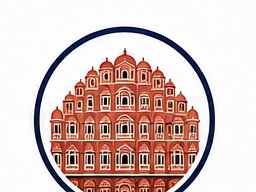
* The Golden Triangle: The most popular tourist circuit connecting Delhi, Agra (home to the iconic Taj Mahal), and Jaipur (the Pink City, famous for its Rajput forts). * Heritage Sites: India has over 40 UNESCO World Heritage sites, including the Ajanta and Ellora Caves, Hampi, Qutub Minar, and the Sun Temple at Konark. * Spiritual Tourism: Varanasi on the banks of the Ganges, the Golden Temple in Amritsar, Bodh Gaya (where the Buddha attained enlightenment), and the Meenakshi Temple in Madurai. * Nature & Landscapes: The backwaters of Kerala, the Himalayan ranges in Ladakh and Himachal Pradesh, the deserts of Rajasthan, and the beaches of Goa and the Andaman Islands.
RecreationOpen ↗
Recreational activities in India span from traditional pursuits to adventure tourism.
* Adventure Sports: Trekking and mountaineering are immensely popular in the Himalayas (Uttarakhand, Himachal Pradesh, Ladakh). White-water rafting is a major draw in Rishikesh. * Water Sports: Scuba diving and snorkeling are centered around the Andaman and Nicobar Islands and Lakshadweep. Surfing is growing in coastal areas like Mahabalipuram and Varkala. * Wellness Retreats: India is the birthplace of Yoga. Rishikesh, Mysore, and Kerala host thousands of visitors seeking yoga ashrams and Ayurvedic healing retreats. * Wildlife Safaris: Jeep and elephant safaris in national parks are popular for spotting tigers, elephants, and rhinos.
Parks & natureOpen ↗
India's immense geographic diversity supports a wide array of ecosystems and wildlife.
* National Parks & Tiger Reserves: Notable parks include Jim Corbett (Uttarakhand), Ranthambore (Rajasthan), Bandhavgarh (Madhya Pradesh), and Bandipur (Karnataka). These are crucial for "Project Tiger," India's successful tiger conservation program. * Kaziranga National Park: Located in Assam, this UNESCO site is the stronghold of the Indian one-horned rhinoceros. * The Sundarbans: The largest mangrove forest in the world, spanning the border with Bangladesh, famous for the elusive Bengal tiger. * Flora and Fauna: India is home to the Bengal Tiger, Indian Elephant, Asiatic Lion (found only in Gir Forest, Gujarat), Snow Leopard, and over 1,300 species of birds.
Rivers, lakes & waterwaysOpen ↗
Waterways have shaped India's civilization, agriculture, and religious practices for millennia.
* Major Rivers: The Ganges (Ganga) is the most sacred river in Hinduism and the lifeline of northern India. Other crucial rivers include the Yamuna, Brahmaputra, Godavari, Krishna, Narmada, and Kaveri. * Lakes: Key lakes include Dal Lake (Jammu & Kashmir), famously dotted with houseboats; Chilika Lake (Odisha), the largest coastal lagoon in India and a major avian wintering ground; and Vembanad Lake (Kerala). * Coastline: India's peninsula is bounded by the Arabian Sea to the west, the Bay of Bengal to the east, and the Indian Ocean to the south, totaling over 7,500 kilometers of coastline. * Waterfalls: Prominent waterfalls include Dudhsagar (Goa) and Jog Falls (Karnataka).
Arts & cultureOpen ↗
India's culture is one of the oldest and most continuous in the world, marked by extraordinary linguistic and artistic diversity.
* Performing Arts: India recognizes eight classical dance forms, including Bharatanatyam, Kathak, Kathakali, and Odissi. Classical music is divided into two main traditions: Hindustani (North) and Carnatic (South). * Cinema: India has the largest film industry in the world by ticket sales. While Hindi-language "Bollywood" is the most globally recognized, massive regional industries (Tollywood, Kollywood, Mollywood) produce critically acclaimed and blockbuster cinema. * Literature & Crafts: Indian literature spans millennia from the ancient Sanskrit epics (Mahabharata and Ramayana) to modern award-winning English, Hindi, and regional authors. The country also boasts a rich tradition of textiles, pottery, and jewelry making.
ReligionOpen ↗
India is a deeply spiritual country and the birthplace of four major world religions: Hinduism, Buddhism, Jainism, and Sikhism.
* Demographics: Hinduism is the majority religion (approx. 79.8%). India also has the world's third-largest Muslim population (approx. 14.2%). Other significant communities include Christians (2.3%), Sikhs (1.7%), Buddhists, and Jains. * Minority Faiths: India is home to historically significant populations of Zoroastrians (Parsis), Jews, and the Bahá'í faith (represented by the Lotus Temple in Delhi). * Syncretism: Indian culture is heavily influenced by religious syncretism, where festivals, shrines (like Sufi dargahs), and daily practices often transcend strict religious boundaries.
SportsOpen ↗
While India has a rich history of indigenous sports, modern athletics are heavily dominated by a single game.
* Cricket: Cricket is a national obsession. The Board of Control for Cricket in India (BCCI) is the richest governing body in the sport. The Indian Premier League (IPL) is one of the most lucrative and attended sports leagues in the world. * Field Hockey: Historically, India dominated field hockey, winning eight Olympic gold medals. The sport remains highly respected. * Kabaddi: An indigenous contact sport that has seen a massive resurgence due to the televised Pro Kabaddi League. * Other Sports: India is a rising power in badminton, wrestling, boxing, and shooting. Chess, which originated in India, is highly popular, producing numerous Grandmasters. * Stadiums: The Narendra Modi Stadium in Ahmedabad is the largest stadium in the world by seating capacity.
EventsOpen ↗
India's calendar is packed with vibrant festivals and events, reflecting its multicultural society.
* Diwali: The Hindu festival of lights, celebrated nationwide with lamps, fireworks, and sweets. * Holi: The festival of colors, welcoming spring with exuberant public celebrations. * Eid al-Fitr & Eid al-Adha: Major Islamic festivals celebrated with feasts and communal prayers. * Regional Festivals: Durga Puja in West Bengal, Ganesh Chaturthi in Maharashtra, Onam in Kerala, and Pongal in Tamil Nadu. * Kumbh Mela: A Hindu pilgrimage held every 12 years at four riverbank sites, widely considered the largest peaceful gathering of humans on Earth. * National Days: Republic Day (Jan 26) features a grand parade in New Delhi, and Independence Day (Aug 15) is marked by flag-hoisting ceremonies nationwide.
MediaOpen ↗
India has a highly active, pluralistic, and massive media landscape.
* Print: India is one of the few global markets where print media is still growing. Major English dailies include *The Times of India*, *The Hindu*, and *Hindustan Times*. Hindi dailies like *Dainik Jagran* and *Dainik Bhaskar* have circulations in the tens of millions. * Television: The state-owned broadcaster is Doordarshan. There are hundreds of private satellite channels across news, entertainment, and sports, broadcasting in dozens of languages. * Radio: All India Radio (AIR) is the national public radio broadcaster. Private FM channels are incredibly popular in urban centers for music and entertainment. * Digital: With some of the cheapest mobile data rates in the world, internet penetration is massive, driving a boom in OTT streaming platforms, YouTube consumption, and digital news portals.
Prominent personalitiesOpen ↗
India has produced highly influential figures across all fields of human endeavor. A select few include:
* Mahatma Gandhi: The preeminent leader of Indian independence and pioneer of non-violent civil disobedience. * Rabindranath Tagore: Poet, philosopher, and the first non-European to win the Nobel Prize in Literature (1913). * B. R. Ambedkar: Chief architect of the Indian Constitution and social reformer. * Srinivasa Ramanujan: A self-taught mathematical genius who made extraordinary contributions to mathematical analysis and number theory. * C. V. Raman: Physicist who won the Nobel Prize for his discovery of the Raman effect. * Sachin Tendulkar: Widely regarded as one of the greatest batsmen in the history of cricket. * Lata Mangeshkar: Legendary playback singer whose voice defined Indian cinema for decades. * A. P. J. Abdul Kalam: Aerospace scientist and the 11th President of India, known as the "Missile Man."
Notable companiesOpen ↗
India's corporate sector features massive conglomerates and globally recognized technology firms.
* Tata Group: One of India's oldest and largest conglomerates, with holdings in steel, automotive (Tata Motors/Jaguar Land Rover), IT, aviation (Air India), and consumer goods. * Reliance Industries: A massive multinational conglomerate led by Mukesh Ambani, dominating petrochemicals, retail, and telecommunications (Jio). * IT Giants: Tata Consultancy Services (TCS), Infosys, and Wipro are global leaders in IT services and consulting. * Financial Institutions: HDFC Bank, State Bank of India (SBI), and ICICI Bank dominate the financial sector. * Automotive: Maruti Suzuki, Mahindra & Mahindra, and Bajaj Auto are key players in domestic and international vehicle manufacturing.
Sister citiesOpen ↗
While sister-city agreements are established at the municipal level rather than the national level, prominent Indian cities maintain vital sister-city and twin-city relationships globally to foster cultural and economic ties. Notable examples include:
* Mumbai: Los Angeles (USA), Saint Petersburg (Russia), Stuttgart (Germany). * New Delhi: Chicago (USA), London (UK), Moscow (Russia). * Ahmedabad: Kyoto (Japan). * Bengaluru: San Francisco (USA), Chengdu (China). * Chennai: Denver (USA), Frankfurt (Germany).