

Basic informationOpen ↗
| Attribute | Detail | | :--- | :--- | | Official Name | Srinagar | | Common Name | Srinagar | | Native Name(s) | سِریٖنَگَر (Kashmiri) | | Nicknames | The City of Lakes, Venice of the East | | Motto | _Data not readily available for this location._ | | Geographic Level | City | | Country | India | | State/Province | Jammu and Kashmir (Union Territory) | | Capital | Summer Capital of Jammu and Kashmir | | Government Type | Municipal Corporation | | Date Founded | 3rd Century BC (approximate) | | Time Zone | Indian Standard Time (UTC+05:30) | | Latitude | 34.0837° N | | Longitude | 74.7973° E | | Elevation | 1,585 m (5,200 ft) | | Total Area | 294 km² (114 sq mi) | | Population | ~1,192,792 (2011 Census) | | Population Density | ~4,000/km² (~10,000/sq mi) | | ZIP/Postal Codes | 190001–190025 | | Area Codes | +91 194 | | Official Languages | Kashmiri, Urdu, Hindi, English, Dogri | | Currency | Indian Rupee (INR) | | Demonym | Srinagarite / Kashmiri |
OverviewOpen ↗
Srinagar is the summer capital and the largest city of the Indian union territory of Jammu and Kashmir. Situated in the heart of the Kashmir Valley along the banks of the Jhelum River, it is universally celebrated for its breathtaking natural beauty, historic gardens, and extensive network of lakes. The city serves as the cultural and economic focal point of the valley, blending centuries of diverse historical influences into a unique and vibrant local identity.
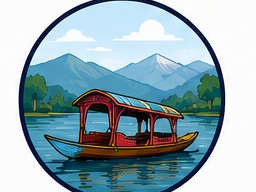
Often affectionately referred to as the "Venice of the East," Srinagar is most famous for Dal Lake and Nigeen Lake, where elaborately carved wooden houseboats and slender traditional boats known as *shikaras* glide across the water. Its manicured Mughal Gardens—such as Shalimar Bagh, Nishat Bagh, and Chashma Shahi—were laid out centuries ago by emperors who viewed the valley as an earthly paradise.
Beyond its scenic landscapes, Srinagar is a thriving center for traditional arts. The city's artisans are world-renowned for their mastery in crafting Pashmina shawls, intricate hand-knotted carpets, walnut wood carvings, and papier-mâché artifacts. Today, Srinagar remains a vital intersection of heritage, natural splendor, and a resilient local community.
HistoryOpen ↗
Srinagar’s history stretches back over two millennia, steeped in both recorded events and rich regional legends. The founding of the city is traditionally attributed to the Mauryan Emperor Ashoka in the 3rd century BC, who is said to have established the old city of Srinagari, though later historical texts like the *Rajatarangini* by Kalhana credit King Pravarasena II with founding the present city roughly 2,000 years ago. Early in its history, the region was an important center for Hinduism and Buddhism.
In the 14th century, the city transitioned to Islamic rule under the Shah Mir dynasty, marking the beginning of a profound cultural and architectural transformation. This period saw the introduction of Central Asian arts, crafts, and Sufi traditions. In 1586, the Mughal Emperor Akbar conquered the Kashmir Valley, ushering in an era of aesthetic development. The Mughals built the city's famous terraced gardens and grand mosques, utilizing Srinagar as their favored summer retreat.
Following the decline of the Mughal Empire, Srinagar fell under the often-harsh rule of the Afghan Durrani Empire (1752), followed by the Sikh Empire under Maharaja Ranjit Singh (1819). In 1846, after the First Anglo-Sikh War, the British sold Kashmir to the Dogra ruler Gulab Singh, who established the princely state of Jammu and Kashmir. During the partition of India in 1947, the Dogra Maharaja acceded to India, making Srinagar part of the Indian republic. In modern times, the city has experienced periods of intense geopolitical conflict and insurgency starting in the late 1980s. However, recent years have seen a resurgence in stability, urban modernization, and a renewed boom in domestic and international tourism.
GeographyOpen ↗
Srinagar is centrally located in the Kashmir Valley, a vast, bowl-shaped basin nestled between the Karakoram range to the north and the Pir Panjal range to the south. The city itself spans both banks of the Jhelum River, which meanders through the city and acts as a primary geographical and historical artery before eventually flowing into Pakistan.
The geography of Srinagar is defined by its water bodies and wetlands. Dal Lake, Nigeen Lake, and Anchar Lake dominate the urban landscape, while the Hokersar Wetland serves as a crucial habitat for migratory birds arriving from Siberia and Central Asia. The surrounding terrain provides rich alluvial soil, contributing to the lush greenery and agricultural productivity of the region's outskirts.
TopographyOpen ↗
The topography of Srinagar is largely a flat valley floor set at an average elevation of 1,585 meters (5,200 feet). Despite this relatively flat urban core, the city is beautifully framed by the imposing Zabarwan Mountain Range to the east.
Prominent topographical features within the city limits include two major hillocks that rise sharply from the valley floor. Shankaracharya Hill (historically known as Takht-i-Suleiman), crowned with an ancient Shiva temple, overlooks Dal Lake. Hari Parbat, another prominent hill, is topped with an 18th-century fort and is considered sacred by Hindus, Muslims, and Sikhs alike. The city is also characterized by a high water table and extensive flood plains adjacent to the Jhelum River.
Weather & climateOpen ↗
Srinagar experiences a humid subtropical climate (Köppen classification: *Cfa*), though its elevation gives it distinct Mediterranean and continental influences. The weather is heavily dictated by its high altitude and the surrounding Himalayas.
Winters (December to February) are notably cold and snowy. The most severe 40-day winter period, known locally as *Chillai Kalan*, sees nighttime temperatures frequently dropping below freezing (often around -2°C to -5°C). Spring (March to May) is cool and receives the highest amount of rainfall, bringing the city's famous tulip and almond blossoms to life. Summers (June to August) are warm and pleasant, with average daytime temperatures ranging from 25°C to 30°C (77°F to 86°F), making it an ideal summer retreat. Autumn (September to November) is cool, relatively dry, and visually spectacular as the leaves of the local Chinar trees turn brilliant shades of gold and red. The best time to visit is generally between April and October.
PopulationOpen ↗
According to the last official census in 2011, Srinagar city had a population of approximately 1.19 million, making it the most populous city in Jammu and Kashmir. The population has steadily grown since then, driven by natural increase and rural-to-urban migration within the valley.
The city is predominantly Muslim, comprising roughly 96% of the population, followed by minority communities of Hindus and Sikhs. Kashmiri is the native language and the most widely spoken, though Urdu acts as the lingua franca and official language. English is widely understood and used in government, education, and the tourism sector, while Hindi is also commonly spoken. The cultural fabric is deeply influenced by Sufi traditions, known locally as *Kashmiriyat*, which emphasizes communal harmony and spiritual syncretism.
GovernmentOpen ↗
Srinagar is administered by the Srinagar Municipal Corporation (SMC), which oversees the civic infrastructure and public services for the city. The SMC is headed by a Mayor and a Municipal Commissioner, with the city divided into numerous wards, each represented by elected corporators.
As the summer capital of the Union Territory of Jammu and Kashmir, Srinagar hosts the civil secretariat and top governmental offices from May to October—a bi-annual shifting of the capital known historically as the *Darbar Move* (though this practice has been significantly altered and digitized in recent years). The broader administration falls under the purview of the Lieutenant Governor of Jammu and Kashmir, representing the Government of India.
EconomyOpen ↗
Srinagar's economy is highly dependent on tourism, agriculture, and traditional handicrafts. As a major urban center in the valley, it also acts as a commercial hub for surrounding rural districts.
While industrial manufacturing is limited due to the region's ecology and geography, the city thrives on its cottage industries. Retail, hospitality, and public sector employment also form significant portions of the local economy. In recent years, the government has pushed for modernizing the economy by encouraging IT startups and improving digital infrastructure. Cost of living is generally moderate compared to major Indian metropolitan areas like Mumbai or Delhi, though imported goods and housing can carry a premium.
IndustriesOpen ↗
* Tourism & Hospitality: The backbone of the local economy, encompassing hotels, houseboats, restaurants, tour operators, and transportation, drawing millions of domestic and international visitors annually. * Handicrafts & Handlooms: A world-renowned sector producing Pashmina shawls, hand-knotted silk carpets, crewel embroidery, papier-mâché, and exquisite walnut wood furniture. * Horticulture: While farming happens outside the city, Srinagar serves as the processing, packaging, and export hub for Kashmiri apples, walnuts, almonds, and cherries. * Silk & Textiles: Srinagar has a historic silk industry, supported by government silk factories and private weavers producing high-quality silk garments. * Retail & Trade: The city acts as the primary wholesale and retail distribution center for the entire Kashmir Valley.
AgricultureOpen ↗
While Srinagar is primarily an urban area, agriculture and horticulture play an enormous role in its economy and the surrounding districts. The region is famous for its high-quality apples, walnuts, and cherries. Nearby Pampore (just outside Srinagar) is one of the few places in the world that cultivates saffron, a highly prized and lucrative spice.
A unique agricultural feature within the city itself is the floating vegetable gardens on Dal Lake. Known as *radh*, these man-made floating islands are constructed from nutrient-rich lake weeds and soil. Farmers cultivate cucumbers, tomatoes, melons, and other vegetables here, which are famously traded at the dawn floating market.
HousingOpen ↗
Housing in Srinagar reflects a mix of heritage and modernity. The historic downtown (Shahr-e-Khaas) is characterized by densely packed, traditional multi-story brick and timber homes utilizing *Taq* and *Dhajji Dewari* architectural styles, which are naturally earthquake-resistant.
In contrast, neighborhoods in the civil lines and newly developed suburbs feature modern concrete single-family homes, often with sloping tin roofs designed to shed heavy winter snow. The most unique housing option remains the houseboats moored along Dal and Nigeen Lakes, which serve both as residences for locals and boutique accommodations for tourists. Real estate prices have been rising steadily as the city expands, leading to the gradual emergence of apartment complexes and modern housing colonies on the city's outskirts.
NeighborhoodsOpen ↗
* Lal Chowk: The bustling commercial heart of the city, famous for its historic clock tower (Ghanta Ghar), hotels, and retail stores. * Shahr-e-Khaas (Downtown): The historical core of Srinagar, featuring narrow winding streets, ancient shrines, traditional markets, and historic bridges across the Jhelum. * Rajbagh: An upscale residential and commercial neighborhood known for its modern homes, cafes, and proximity to the river. * Hazratbal: Located on the northern shores of Dal Lake, known primarily for the revered Hazratbal Shrine and the campus of the University of Kashmir. * Bemina: One of the largest developing residential and institutional areas on the western side of the city. * Sonwar: A prestigious area housing political leaders, top bureaucrats, and parts of the military cantonment.
TransportationOpen ↗
Srinagar is connected to the rest of India primarily by air and road. The Sheikh ul-Alam International Airport provides daily flights to major Indian cities like Delhi, Mumbai, and Chandigarh. National Highway 44 (NH44) is the crucial road link connecting Srinagar to Jammu and the rest of the country, though it is occasionally subjected to closures during heavy winter snows.
Public transit within the city is facilitated by the State Road Transport Corporation (SRTC) buses, private minibuses, and auto-rickshaws. Recently, a fleet of electric buses was introduced under the Srinagar Smart City initiative. A highly anticipated railway link—the Udhampur-Srinagar-Baramulla Railway Link (USBRL)—is nearing completion and will connect the Kashmir Valley to the Indian railway network. Locally, *shikaras* (traditional wooden boats) are widely used for transport across the city's lakes.
InfrastructureOpen ↗
Srinagar's infrastructure has seen significant upgrades under the federal Smart City Mission. Electricity is provided by the Jammu and Kashmir Power Development Department (JKPDD), largely sourced from local hydroelectric plants, though winter power curtailments remain a historical challenge.
Water supply is managed by the Jal Shakti department, drawing from the Jhelum River, Sindh stream, and local lakes. Telecom and internet connectivity are provided by major national carriers (Jio, Airtel, BSNL) with widespread 4G and growing 5G coverage, as well as fiber broadband. Recent urban development has focused on creating pedestrian-friendly walkways, riverfront promenades, and dedicated cycling tracks.
EducationOpen ↗
* University of Kashmir: The premier state university located in Hazratbal, offering undergraduate, postgraduate, and doctoral programs across various disciplines. * National Institute of Technology (NIT) Srinagar: A prestigious, centrally-funded engineering and research institution. * Government Medical College (GMC) Srinagar: One of the oldest and most prominent medical schools in the region. * Sher-e-Kashmir University of Agricultural Sciences and Technology (SKUAST): Specializes in agriculture, horticulture, and veterinary sciences, vital to the region's economy. * Tyndale Biscoe and Mallinson School: Historic and highly regarded missionary schools established in the late 19th century. * Delhi Public School (DPS) Srinagar: A prominent modern private K-12 institution known for excellent facilities and academic standards.
From Srinagar →
Popular neighbouring-country destinations frequently paired with Srinagar.
Local news
via Google News · refreshed hourly- J-K: NC leaders protest near BJP office in Srinagar, demand restoration of statehood - ANI NewsANI News· Sep 2, 2026J-K: NC leaders protest near BJP office in Srinagar, demand restoration of statehood ANI News
- Jammu and Kashmir protests: NC, BJP stage rival protests in Srinagar; police foil both marches - Mid-DayMid-Day· Sep 2, 2026Jammu and Kashmir protests: NC, BJP stage rival protests in Srinagar; police foil both marches Mid-Day
- NIT Srinagar Rises to 19th in India Today Technical University Rankings - kashmirlife.netkashmirlife.net· Sep 1, 2026NIT Srinagar Rises to 19th in India Today Technical University Rankings kashmirlife.net
- BJP Workers Protest Against NC Government In Srinagar - Outlook IndiaOutlook India· Sep 2, 2026BJP Workers Protest Against NC Government In Srinagar Outlook India
- Statehood for J&K: NC to gherao BJP headquarters in Jammu, Srinagar - ThePrintThePrint· Sep 1, 2026Statehood for J&K: NC to gherao BJP headquarters in Jammu, Srinagar ThePrint
- CII J&K concludes 3rd edition of Health Conclave 2026 in Srinagar - Rising KashmirRising Kashmir· Aug 31, 2026CII J&K concludes 3rd edition of Health Conclave 2026 in Srinagar Rising Kashmir
- US envoy Sergio Gor’s Kashmir visit: Why Srinagar still matters to Washington - Deccan HeraldDeccan Herald· Aug 18, 2026US envoy Sergio Gor’s Kashmir visit: Why Srinagar still matters to Washington Deccan Herald
- Ruling NC announces peaceful ‘gherao’ of BJP office in Srinagar, Jammu tomorrow - thehawk.inthehawk.in· Sep 1, 2026Ruling NC announces peaceful ‘gherao’ of BJP office in Srinagar, Jammu tomorrow thehawk.in
