
Lucknow
See what's happening
Browse topics · 32
Lucknow
Basic informationOpen ↗
| Feature | Detail | |---|---| | Official Name | Lucknow | | Common Name | Lucknow | | Native Name(s) | लखनऊ (Hindi), لکھنؤ (Urdu) | | Nicknames | City of Nawabs, The Golden City of the East, Shiraz-i-Hind | | Motto | _Data not readily available for this location._ | | Geographic Level | City | | Country | India | | State/Province | Uttar Pradesh | | Capital | Capital of Uttar Pradesh | | Government Type | Municipal Corporation | | Date Founded | 18th century (Capital of Awadh established 1775) | | Time Zone | Indian Standard Time (IST) (UTC+5:30) | | Latitude | 26.8467° N | | Longitude | 80.9462° E | | Elevation | ~123 m (404 ft) | | Total Area | ~349 sq km (City) | | Population | ~2.9 million (2011 Census), Estimated ~3.8 million (2024) | | Population Density | ~8,000/sq km | | ZIP/Postal Codes | 226001 - 226030 | | Area Codes | +91 522 | | Official Languages | Hindi, Urdu | | Currency | Indian Rupee (INR) | | Demonym | Lucknowite, Lakhnavi |
OverviewOpen ↗
Lucknow, the capital of India's most populous state, Uttar Pradesh, is a city where history, culture, and modernity are seamlessly intertwined. Widely celebrated as the "City of Nawabs," Lucknow is renowned across South Asia for its courteous culture (Tehzeeb), exquisite Awadhi cuisine, and magnificent heritage architecture. The city rests on the banks of the Gomti River, serving as a political, administrative, and cultural heart of North India.
Beyond its historical romanticism, modern Lucknow is a rapidly growing metropolis. It is an important center for education, commerce, aerospace, finance, pharmaceuticals, and information technology. The city seamlessly juxtaposes grand Mughal and British-era monuments like the Bara Imambara and the Residency with contemporary infrastructure such as sprawling IT parks, expressways, and a modern metro system.
Lucknow is perhaps most famous for its traditional *Chikankari*—a delicate, intricate style of hand embroidery that is highly sought after globally. Whether a visitor is drawn to its legendary street food, its rich literary and poetic traditions in Urdu and Hindi, or its bustling bazaars, Lucknow offers a uniquely warm and generous urban experience.
HistoryOpen ↗
Lucknow's history is deeply layered. According to legend, the city is named after Lakshmana, the brother of Lord Rama from the Hindu epic Ramayana, who is said to have founded a settlement known as Lakshmanpur. The city's recorded history traces back to the 13th century when it was part of the Delhi Sultanate, eventually falling under the Mughal Empire.
The true cultural renaissance of Lucknow began in 1732 with the establishment of the Nawabs of Awadh. In 1775, Nawab Asaf-ud-Daula shifted the capital of Awadh from Faizabad to Lucknow. Under the Nawabs, the city flourished into a major center of arts, literature, dance (Kathak), and music. The Nawabs commissioned spectacular monuments, gardens, and palaces, elevating Lucknow to rival Delhi as the cultural capital of North India.
In 1856, the British East India Company annexed Awadh, exiling the last Nawab, Wajid Ali Shah. This sparked intense local resentment, making Lucknow a focal point of the 1857 Indian Rebellion. The Siege of Lucknow, particularly the events at the British Residency, remains a major chapter in British and Indian colonial history.
Following India's independence in 1947, Lucknow became the capital of the newly formed state of Uttar Pradesh. In recent decades, the city has expanded dramatically, evolving from a leisurely historic town into a major administrative and commercial powerhouse, all while fighting to preserve its unique architectural and cultural identity.
GeographyOpen ↗
Lucknow is situated in the heart of the great Indo-Gangetic Plain in northern India. The city is bisected by the Gomti River, a tributary of the Ganges, which meanders from the northwest to the southeast, dividing the city into two distinct halves (the Trans-Gomti and Cis-Gomti regions).
The surrounding geography is dominated by highly fertile alluvial plains formed by the river networks. Because of its location in a vast plain, Lucknow does not feature any major mountains, hills, or distinct natural geological formations. The fertile soil supports significant agricultural belts in the rural outskirts of the district.
Due to its landlocked, plain geography, the natural landscape consists predominantly of agricultural land, floodplains, and patches of dry deciduous forests, though rapid urbanization has heavily reduced green cover within the central metropolitan area.
TopographyOpen ↗
The topography of Lucknow is overwhelmingly flat, characteristic of the Indo-Gangetic Plain. The city's average elevation is approximately 123 meters (404 feet) above sea level.
* Highest Point: General terrain peaks slightly toward the northern and western outskirts, but elevation differences are negligible. * Lowest Point: The riverbed and floodplains of the Gomti River form the lowest elevations. * Terrain: Level plains with a gentle, almost imperceptible slope from the northwest to the southeast, dictating the natural flow of the Gomti River. * Water Bodies: Besides the Gomti, several smaller streams, canals (like the Sharda Canal), and artificial lakes intersect the region.
Weather & climateOpen ↗
Lucknow features a humid subtropical climate (Köppen climate classification *Cwa*), characterized by three distinct seasons: a sweltering summer, a wet monsoon, and a cool, dry winter.
* Summer (March to June): Extremely hot and dry, with average high temperatures often exceeding 40°C (104°F) in May and June. Heatwaves (known locally as *Loo*) are common. * Monsoon (July to September): The southwest monsoon brings relief from the heat, delivering the bulk of the city's average annual rainfall of about 896 mm (35 inches). Humidity levels rise significantly during this period. * Winter (December to February): Winters are generally pleasant and sunny, with daytime highs around 21°C to 25°C (70°F–77°F) and nighttime lows that can occasionally dip below 5°C (41°F). Dense fog is frequent in December and January.
The best time to visit Lucknow is between October and March, when the weather is cool and comfortable.
PopulationOpen ↗
Lucknow is one of the fastest-growing cities in India. As of the last official census in 2011, the city's population was approximately 2.8 million, with the metropolitan area holding around 2.9 million. By 2024, the metropolitan population is estimated to have grown to between 3.5 and 3.9 million.
* Religions: Hinduism is the majority religion (approx. 71%), followed by a significant Muslim population (approx. 26%). Sikhs, Christians, Jains, and Buddhists make up the remainder. * Languages: Hindi is the most widely spoken language, followed closely by Urdu. Awadhi, a regional dialect of Hindi, is also commonly spoken by native residents. * Demographics: The city has a relatively young population, with a large influx of students and young professionals drawn by the educational institutions and growing IT sectors. * Socioeconomics: As a capital city, a significant portion of the workforce is employed in government services, alongside a growing private sector demographic.
GovernmentOpen ↗
The civic administration of the city is managed by the Lucknow Municipal Corporation (LMC), known locally as the Lucknow Nagar Nigam. The corporation is headed by an elected Mayor and an appointed Municipal Commissioner (usually an IAS officer) who oversees the executive functions.
The city is divided into over 100 municipal wards, each represented by an elected corporator. The LMC is responsible for public services such as sanitation, water supply, road maintenance, and street lighting.
As the capital of Uttar Pradesh, Lucknow is the political epicenter of the state. It houses the Uttar Pradesh Vidhan Bhavan (Legislative Assembly), the Chief Minister's Office, and the Raj Bhavan (Governor's Residence). The city is a major constituency in the national parliament (Lok Sabha) and state assembly (Vidhan Sabha), historically represented by several prominent national leaders.
EconomyOpen ↗
Lucknow's economy has historically been driven by the public sector, administration, and traditional handicrafts. However, in recent years, it has transformed into a vibrant commercial and business hub, emerging as one of the top economic centers in northern India outside the National Capital Region (NCR).
The cost of living in Lucknow is generally lower than in major Indian metropolises like Mumbai or New Delhi, though the booming real estate sector is increasing housing costs in prime areas.
The city is receiving massive investments in infrastructure, IT parks, and defense manufacturing corridors. The Uttar Pradesh government is actively promoting Lucknow as a hub for startups, logistics, and medical tourism, ensuring robust economic growth well into the future.
IndustriesOpen ↗
* Information Technology & Services: A rapidly growing sector, with major campuses for TCS, HCL Technologies, and a dedicated IT City (Chak Ganjaria) fueling employment. * Aeronautics & Defense: Hindustan Aeronautics Limited (HAL) operates a major manufacturing facility here. The city is a node in the UP Defense Industrial Corridor. * Automotive: Tata Motors has a prominent manufacturing plant producing commercial vehicles. * Handicrafts & Textiles: The *Chikankari* and *Zardozi* embroidery industries are a major source of employment, particularly for women, and drive significant export revenue. * Healthcare & Pharmaceuticals: With premier medical institutions, Lucknow is a major referral center for healthcare in North India. * Real Estate & Construction: Fueled by urbanization, massive residential and commercial projects are reshaping the city's skyline.
AgricultureOpen ↗
While Lucknow city is highly urbanized, the surrounding Lucknow District relies heavily on agriculture. The fertile alluvial soil of the Indo-Gangetic plain supports the cultivation of several key crops.
* Major Crops: Wheat, paddy (rice), sugarcane, and mustard are the primary staples grown in the rural outskirts. * Horticulture (Mangoes): The town of Malihabad, located in the Lucknow district, is globally famous for its mangoes, particularly the *Dasheri* variety. The region produces thousands of tons of mangoes annually, driving significant agricultural export. * Livestock & Dairy: Dairy farming and poultry are significant supplementary agricultural activities, supplying the high urban demand for milk and meat.
HousingOpen ↗
The housing market in Lucknow is a study in contrasts, offering everything from centuries-old ancestral homes to ultra-modern high-rise condominiums.
* Old City: Areas like Chowk and Aminabad feature traditional, densely packed homes, often characterized by narrow lanes, inner courtyards, and older architectural styles. * Post-Independence Colonies: Areas like Indira Nagar and Aliganj consist largely of single-family homes, independent bungalows, and row houses built in the late 20th century. * Modern Developments: Gomti Nagar, Gomti Nagar Extension, and Sushant Golf City are defined by modern high-rise apartments, gated communities, villas, and integrated townships. * Market Conditions: The real estate market is booming. While affordable housing projects are heavily promoted by the government on the city's periphery, prime areas have seen property prices rivaling those of tier-1 cities.
NeighborhoodsOpen ↗
* Hazratganj: The central commercial district, famous for its Victorian architecture, premium retail stores, cafes, and the traditional evening stroll known as "Ganjing." * Gomti Nagar: The largest planned residential and commercial neighborhood in India, home to IT parks, massive malls, parks, and upscale housing. * Chowk: The cultural and historical heart of old Lucknow, famous for Awadhi street food (Tunday Kebabi), Chikankari markets, and Mughal architecture. * Aminabad: One of the oldest and busiest commercial markets in the city, known for traditional clothing, jewelry, and books. * Indira Nagar: Once considered the largest residential colony in Asia, it is a bustling, well-established neighborhood with its own commercial hubs. * Aliganj: A prominent residential area known for the historic Hanuman Temple and educational coaching centers.
TransportationOpen ↗
Lucknow boasts a comprehensive, rapidly modernizing transportation network connecting it to the rest of India.
* Air: Chaudhary Charan Singh International Airport (LKO) is one of the busiest in North India, operating domestic and international flights. * Rail: Lucknow Charbagh Railway Station is the main architectural marvel and transit hub, serving as the headquarters of the North Eastern Railway. It connects the city to virtually every part of the country. * Public Transit (Metro): The Lucknow Metro is a state-of-the-art rapid transit system. Currently, the Red Line (North-South corridor) is fully operational, greatly easing urban traffic. * Roadways: The city is connected by a web of expressways, notably the Agra-Lucknow Expressway and the Purvanchal Expressway, drastically cutting travel time to Delhi and eastern UP. * Local Transit: UPSRTC operates a fleet of city buses (including electric buses). Auto-rickshaws and battery-operated e-rickshaws provide crucial last-mile connectivity. Rideshare services like Ola and Uber are widely used.
InfrastructureOpen ↗
Lucknow's public infrastructure has seen significant upgrades in recent years, though it continues to manage the pressures of a growing population.
* Electricity: Power distribution is managed by the Lucknow Electricity Supply Administration (LESA) under the state power corporation (UPPCL). * Water & Sanitation: The Jal Sansthan (Water Board) manages municipal water supply, which is drawn from the Gomti River and groundwater sources. Sewage treatment plants have been upgraded, though old city drainage remains a challenge. * Telecommunications: The city enjoys robust internet connectivity. 5G, 4G LTE, and high-speed broadband/fiber networks are provided by all major Indian telecom operators (Jio, Airtel, BSNL). * Urban Spaces: Lucknow is known for massive urban parks, including the Janeshwar Mishra Park (one of Asia's largest parks) and the Dr. Ram Manohar Lohia Park.
EducationOpen ↗
Lucknow has long been recognized as an educational hub in North India, home to several institutions of national importance.
* Universities: The University of Lucknow is a premier state institution. Dr. A.P.J. Abdul Kalam Technical University (AKTU) oversees technical education for the entire state. * Specialized Institutes: The Indian Institute of Management Lucknow (IIM-L) is consistently ranked among the top management schools in India. * Medical Schools: King George's Medical University (KGMU) and Sanjay Gandhi Postgraduate Institute of Medical Sciences (SGPGIMS) are among India's highest-ranked medical and research institutes. * Schools: Lucknow is famous for its historic secondary schools, notably La Martiniere College (founded in 1845). The city is also home to the City Montessori School (CMS), recognized by the Guinness Book of World Records as the world's largest school by number of pupils.
HealthcareOpen ↗
Lucknow serves as a major medical hub for Uttar Pradesh and neighboring states, offering a mix of historic government institutions and modern private facilities.
* Government & Academic Institutions: King George's Medical University (KGMU) is a premier medical school and hospital dating back to 1911. The Sanjay Gandhi Postgraduate Institute of Medical Sciences (SGPGI) and Dr. Ram Manohar Lohia Institute of Medical Sciences (RMLIMS) are highly regarded for specialized care and research. * Private Hospitals: Major private players include Medanta Lucknow, Sahara Hospital, Apollomedics Super Speciality Hospital, and Max Super Speciality. * Alternative Medicine: The city has a strong tradition of Unani and Ayurvedic medicine, supported by institutions like the Central Council for Research in Ayurvedic Sciences (CCRAS).
Emergency servicesOpen ↗
Lucknow is covered by the unified emergency response system of Uttar Pradesh.
* National Emergency Number: 112 (Integrated Police, Fire, and Ambulance) * Police: 100 (Direct) – Administered by the Lucknow Police Commissionerate. * Ambulance: 108 * Fire: 101 * Disaster Management: The State Disaster Response Force (SDRF) operates from the region to handle natural disasters, flooding, and large-scale emergencies.
BusinessesOpen ↗
Lucknow's economy relies on a blend of government services, traditional artisan industries, and a rapidly expanding IT and corporate sector.
* Traditional Crafts: The city is globally recognized for *Chikankari* (shadow-work embroidery) and *Zardozi* (gold/silver wire embroidery), largely centered in the Chowk and Aminabad districts. * IT and Tech: The HCL IT City (Chak Ganjaria) and Tata Consultancy Services (TCS) represent the modern tech presence in the Gomti Nagar extension. * Retail and Commercial Districts: Hazratganj is the historic retail and commercial heart of the city, lined with Victorian-era architecture, while Gomti Nagar serves as the modern corporate and financial hub. * Manufacturing: Tata Motors has a significant manufacturing plant in the city, and Hindustan Aeronautics Limited (HAL) operates a major aerospace accessories division.
Restaurants & foodOpen ↗
Known historically as the "City of Nawabs," Lucknow is synonymous with Awadhi cuisine, renowned for its slow-cooking techniques (Dum Pukht) and delicate use of spices.
* Signature Dishes: Galouti Kebab, Tunday Kebab, Nihari Kulcha, Awadhi Biryani, and Sheermal (saffron-flavored flatbread). * Famous Eateries: Tunday Kababi (in Chowk and Aminabad) is internationally famous for its melt-in-the-mouth kebabs. Other iconic spots include Rahim's Kulcha Nihari, Idris Biryani, and Dastarkhwan. * Street Food & Sweets: Prakash Kulfi in Aminabad, Royal Cafe in Hazratganj (famous for Basket Chaat), and Makkhan Malai (a frothy, saffron-infused winter delicacy available primarily in Chowk).
TourismOpen ↗
The architecture and heritage of Lucknow vividly reflect its time as the cultural capital of the Nawabs of Awadh.
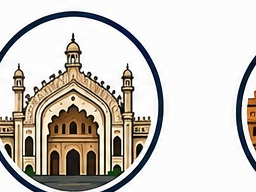
* Historic Landmarks: The Bara Imambara (featuring the spectacular *Bhool Bhulaiya* labyrinth), Chhota Imambara, and the iconic Rumi Darwaza, often considered the symbol of the city. * Colonial Era Sites: The Residency provides a poignant, preserved ruin from the 1857 uprising. La Martiniere College and Chattar Manzil are other striking examples of European-influenced architecture. * Modern Attractions: Dr. Ambedkar Park is a vast, modern memorial constructed entirely of pink sandstone, and the Gomti Riverfront offers a popular evening promenade.
RecreationOpen ↗
Residents and visitors enjoy a mix of cultural recreation, sports, and outdoor activities.
* Parks & Walks: Walking, cycling, and boating at Janeshwar Mishra Park. * Golf: The historic Lucknow Golf Club offers an 18-hole course with heritage club facilities. * Family Activities: The Nawab Wajid Ali Shah Prani Udyan (Lucknow Zoo), the Regional Science City, and various modern multiplexes and malls in Gomti Nagar.
Parks & natureOpen ↗
Despite being a densely populated urban center, Lucknow maintains several expansive green spaces.
* Janeshwar Mishra Park: Claimed to be one of Asia's largest urban parks, featuring lakes, miles of jogging tracks, and gondola rides. * Kukrail Reserve Forest: An urban forest and picnic spot known for its Gharial (crocodile) rehabilitation center and deer park. * Dr. Ram Manohar Lohia Park: A popular, beautifully landscaped park in Gomti Nagar. * National Botanical Research Institute (NBRI): Features extensive, scientifically curated botanical gardens that are open to the public.
Rivers, lakes & waterwaysOpen ↗
Lucknow's geography and development are closely tied to its regional water systems.
* Gomti River: A tributary of the Ganges, it is the defining geographic feature of Lucknow, dividing the city into the trans-Gomti and cis-Gomti regions. The Gomti Riverfront has been developed with promenades, cycling tracks, and musical fountains. * Sharda Canal: Runs through parts of the city outskirts, providing crucial irrigation resources and scenic, tree-lined stretches.
Arts & cultureOpen ↗
Lucknow is a major historic center of North Indian art, classical music, and Urdu literature.
* Dance & Music: It is the birthplace of the Lucknow *gharana* of Kathak (Indian classical dance), pioneered by the legendary Kalka-Bindadin family. It is also deeply associated with Ghazal singing and Thumri. * Literature: A historical hub for Urdu poetry (*shayari*) and literature, known for its refined linguistic etiquette (*Tehzeeb*). * Institutions: Bhatkhande Sanskriti Vishwavidyalaya is a premier music university, and the state Lalit Kala Akademi promotes fine arts. * Crafts: *Chikankari* embroidery is the city's most famous artistic export, deeply ingrained in the local culture.
ReligionOpen ↗
Lucknow is celebrated for its *Ganga-Jamuni Tehzeeb*—a cultural syncretism of Hindu and Muslim traditions living in harmony.
* Demographics: The population is primarily Hindu, with a substantial and historically influential Muslim minority (comprising both Shia and Sunni communities). * Hindu Sites: Important temples include Mankameshwar Mandir, Chandrika Devi Temple, and the Hanuman Setu Temple. * Islamic Sites: Asifi Mosque (within the Bara Imambara complex), Jama Masjid, and the Shah Najaf Imambara. * Other Faiths: There is a notable Sikh presence centered around the historic Gurdwara Yahiyaganj, as well as historic Christian congregations like the All Saints Garrison Church.
SportsOpen ↗
Lucknow has rapidly developed its sporting infrastructure in recent years.
* Cricket: The Bharat Ratna Shri Atal Bihari Vajpayee Ekana Cricket Stadium is a world-class, 50,000-seat venue that hosts international matches and is home to the IPL franchise *Lucknow Super Giants*. * Badminton: The Babu Banarasi Das (BBD) Badminton Academy is a premier facility that frequently hosts national and international tournaments. * Kabaddi: The city is home to the *UP Yoddhas* of the Pro Kabaddi League. * Traditional Venues: KD Singh Babu Stadium, located in the heart of the city, has historically hosted domestic cricket, hockey, and athletics.
EventsOpen ↗
The city's calendar is marked by cultural festivals and grand religious observances.
* Lucknow Mahotsav: An annual festival traditionally held in winter, showcasing Awadhi culture, food, crafts, and performances. * Sanatkada Festival: A popular cultural, historical, and literary festival celebrating local crafts, heritage, and regional cuisine. * Muharram: Lucknow is world-famous for its deeply emotive and elaborate Muharram processions (Azadari), drawing Shia Muslims from across the globe. * Festivals: Diwali, Eid al-Fitr, Eid al-Adha, and Holi are celebrated with immense enthusiasm and cross-cultural participation.
MediaOpen ↗
Lucknow is a prominent media hub for Hindi, Urdu, and English journalism in North India.
* Print: Major dailies include *The Times of India*, *Hindustan Times*, *Dainik Jagran*, *Amar Ujala*, and *Navbharat Times*. * Television: Doordarshan Kendra Lucknow produces local and regional programming, alongside major regional bureaus for national news networks (like Aaj Tak, ABP News, and News18). * Radio: Local FM stations include All India Radio (AIR), Radio Mirchi, Red FM, Big FM, and Radio City.
Prominent personalitiesOpen ↗
* Atal Bihari Vajpayee: Former Prime Minister of India, who represented Lucknow in the Lok Sabha for multiple terms. * Nawab Wajid Ali Shah: The last King of Awadh, remembered as a great patron of the arts, music, and Kathak dance. * Birju Maharaj: Renowned Kathak dancer belonging to the legendary Kalka-Bindadin gharana of Lucknow. * Cliff Richard: Legendary British pop singer; born in Lucknow in 1940. * Naushad Ali: One of Bollywood's foremost classical music directors. * Kaifi Azmi: Celebrated Urdu poet and lyricist with deep ties to the cultural fabric of Awadh. * Javed Akhtar: Acclaimed poet, lyricist, and screenwriter who spent formative years studying in Lucknow.
Notable companiesOpen ↗
* Sahara India Pariwar: The massive Indian conglomerate was historically headquartered in Lucknow in the Sahara States complex. * HCL Technologies: Operates a sprawling 100-acre IT campus that is one of the largest regional employers in the tech sector. * TCS (Tata Consultancy Services): A major IT employer with a large regional development center. * Tata Motors: Operates one of its significant commercial vehicle manufacturing plants here. * PTC Industries: A prominent advanced manufacturing and aerospace components company headquartered in Lucknow.
Sister citiesOpen ↗
_Data not readily available for this location._
From Lucknow →
Popular neighbouring-country destinations frequently paired with Lucknow.
Local news
via Google News · refreshed hourly- No salary cuts, no arbitrary firing: New system for UP’s 3.5 lakh outsourced workers - The Indian ExpressThe Indian Express· Sep 2, 2026No salary cuts, no arbitrary firing: New system for UP’s 3.5 lakh outsourced workers The Indian Express
- Uttar Pradesh on alert as major rivers cross danger mark | Hindustan Times - Hindustan TimesHindustan Times· Sep 2, 2026Uttar Pradesh on alert as major rivers cross danger mark | Hindustan Times Hindustan Times
- UP to launch Indo-German Gateway to help 20 MSMEs, startups enter Germany, EU markets - timesofindia.indiatimes.comtimesofindia.indiatimes.com· Sep 2, 2026UP to launch Indo-German Gateway to help 20 MSMEs, startups enter Germany, EU markets timesofindia.indiatimes.com
- Odyssey Elevators Grandly Launches Its Lucknow Experience Center, Strengthening Presence in North India - ThePrintThePrint· Sep 1, 2026Odyssey Elevators Grandly Launches Its Lucknow Experience Center, Strengthening Presence in North India ThePrint
- "Lucknow has BrahMos, smart roads and clean Gomti river": CM Yogi highlights city's transformation - ANI NewsANI News· Aug 30, 2026"Lucknow has BrahMos, smart roads and clean Gomti river": CM Yogi highlights city's transformation ANI News
- Pro-Hindu leader shot dead in Lucknow, body dumped in canal; driver detained - India TodayIndia Today· Aug 30, 2026Pro-Hindu leader shot dead in Lucknow, body dumped in canal; driver detained India Today
- 'Dressing room atmosphere has always been relaxed...': Kashi Rudras Kartik Yadav ahead of do-or-die clash against Noida Kings - LivemintLivemint· Sep 2, 2026'Dressing room atmosphere has always been relaxed...': Kashi Rudras Kartik Yadav ahead of do-or-die clash against Noida Kings Livemint
- Defense Minister Rajnath Singh Unveils 12 Development Projects In Lucknow - Deccan ChronicleDeccan Chronicle· Aug 30, 2026Defense Minister Rajnath Singh Unveils 12 Development Projects In Lucknow Deccan Chronicle