
Ocean Conservancy
Ocean Conservancy
About OC
Ocean Conservancy stands as one of the world's most influential voices for marine protection, translating complex ocean science into policy action and grassroots engagement. Since 1972, this Washington-based organization has worked at the intersection of research, advocacy, and community mobilization to address threats ranging from plastic pollution to climate change. Through initiatives like the International Coastal Cleanup and sustained campaigns for science-based fisheries management, Ocean Conservancy has helped shape how governments, industries, and individuals understand their relationship with the sea.
“Healthy oceans are not a niche concern but a matter of national and global importance for every person on Earth.”
History & Founding
Ocean Conservancy emerged during a pivotal moment in American environmental consciousness. The organization was established in 1972, the same year the United States passed the Marine Mammal Protection Act and just two years after the first Earth Day galvanized public attention toward ecological issues. Originally founded as the Delta Foundation, the organization soon evolved its identity to reflect a broader commitment to ocean health, eventually becoming the Center for Marine Conservation before adopting its current name in 2001. This evolution mirrored a growing scientific understanding that ocean issues could not be solved in isolation—that marine ecosystems required integrated approaches addressing everything from pollution to overfishing to habitat destruction.
The organization's founding came at a time when ocean advocacy was fragmented and often reactionary. Early environmentalism had focused heavily on terrestrial ecosystems and charismatic land animals, leaving marine environments comparatively underrepresented in public discourse. Ocean Conservancy helped change that calculus by positioning itself as a bridge between the scientific community and policymakers. From its headquarters in Washington, the organization established itself as a credible voice in the halls of Congress and federal agencies, arguing that healthy oceans were not a niche concern but a matter of national and global importance. This positioning would prove essential as ocean issues gained complexity over the subsequent decades.
Mission & Approach
Ocean Conservancy operates on a foundational belief that science must drive ocean policy. The organization invests heavily in research partnerships and employs marine scientists who work directly alongside policy experts, creating a framework where evidence informs advocacy. This science-first approach distinguishes Ocean Conservancy from organizations that rely primarily on public awareness campaigns. While they certainly engage the public, their theory of change centers on ensuring that decision-makers—whether in government, industry, or international bodies—have access to rigorous data about ocean health and practical pathways for improvement. The organization focuses on issues where policy intervention can create measurable environmental outcomes: sustainable fisheries, marine pollution, climate resilience, and Arctic conservation.
The organization's strategic approach recognizes that ocean health depends on systems change, not isolated interventions. Ocean Conservancy works simultaneously at multiple levels: supporting international treaties and agreements, shaping national legislation, advising on regulatory frameworks, and mobilizing public participation. This multi-scale strategy reflects an understanding that ocean challenges are inherently transboundary. Plastic pollution doesn't respect national borders; fish populations migrate across jurisdictions; climate impacts on marine ecosystems require global cooperation. By maintaining both a strong Washington policy presence and international program offices, Ocean Conservancy positions itself to influence decisions at the points where they matter most, while building the public constituency necessary to sustain long-term political will.
Notable Programs & Impact
Perhaps no Ocean Conservancy initiative has touched more lives than the International Coastal Cleanup, launched in 1986. What began as a Texas beach cleanup has grown into the world's largest volunteer effort for ocean health, engaging millions of volunteers across more than one hundred countries. Each year, participants collect and catalog marine debris, generating the world's largest dataset on ocean trash. This information has proven invaluable for identifying pollution sources, tracking trends over time, and making the case for policy interventions. The data collected by volunteers has informed legislation on single-use plastics, contributed to international agreements on marine pollution, and helped manufacturers understand the downstream impacts of packaging choices. The Coastal Cleanup exemplifies Ocean Conservancy's ability to transform individual action into systemic insight.
The organization has also been instrumental in advancing science-based fisheries management in the United States and internationally. Ocean Conservancy played a significant advocacy role in the 2006 reauthorization of the Magnuson-Stevens Fishery Conservation and Management Act, which strengthened requirements for ending overfishing and rebuilding depleted fish populations. This legislative victory translated into tangible ocean recovery: numerous fish stocks have rebounded under the improved management regime, demonstrating that policy informed by science can reverse ecological decline. The organization continues to defend these protections against efforts to weaken them, while also working to export similar management principles to international fisheries where oversight remains inadequate.
In recent years, Ocean Conservancy has emerged as a leading voice on ocean plastics, launching the Trash Free Seas program to address what has become one of the most visible environmental crises. Rather than focusing exclusively on cleanup, the program emphasizes source reduction and systemic solutions. Ocean Conservancy has worked with industry partners, governments, and other nonprofits to identify pollution hotspots, develop improved waste management infrastructure in coastal communities, and advance policies that reduce plastic production and improve product design. The organization has been particularly active in Southeast Asia, where rapidly developing economies face significant challenges managing waste in the absence of adequate collection and processing systems.
The organization's Arctic work reflects a commitment to protecting ecosystems before they reach crisis points. As climate change opens Arctic waters to increased shipping, oil and gas development, and commercial fishing, Ocean Conservancy has advocated for precautionary approaches that prioritize conservation. The organization has supported Indigenous communities in the Arctic whose food security and cultural practices depend on healthy marine ecosystems, worked to establish protected areas, and pushed for strong environmental safeguards on industrial activities. This forward-looking approach recognizes that preventing harm is more effective than attempting restoration after ecosystems have been degraded.
How They Work in the Field
Ocean Conservancy's field methodology combines direct community engagement with strategic partnership building. In regions where ocean plastic pollution is most severe, the organization works with local governments, waste management authorities, and community organizations to understand the specific barriers preventing effective waste collection and processing. Rather than imposing solutions, Ocean Conservancy's approach involves extensive consultation to identify interventions that fit local contexts—whether that means supporting informal waste picker networks, helping municipalities access financing for infrastructure improvements, or working with industries to reduce packaging at the source. This collaborative model recognizes that sustainable change requires local ownership and must account for economic realities, cultural practices, and existing governance structures.
The organization also invests significantly in convening diverse stakeholders who might not otherwise collaborate. Ocean Conservancy has brought together fishing industry representatives, environmental scientists, Indigenous leaders, and government officials to find common ground on contentious issues. These convenings often reveal that apparent conflicts can be reframed as shared challenges when participants focus on long-term ecosystem health rather than short-term positional disputes. For example, fishers and conservationists both benefit from healthy fish populations; their interests align once management conversations shift from access rights to science-based sustainability. Ocean Conservancy's credibility with both environmental and industry communities allows it to serve as an honest broker in these discussions.
The organization's policy work operates on multiple timescales simultaneously. Ocean Conservancy maintains a steady presence in ongoing regulatory processes—commenting on proposed rules, testifying at hearings, and providing technical expertise to agencies. This patient, detailed work rarely generates headlines but shapes the implementation details that determine whether laws actually protect ocean health. Simultaneously, the organization pursues longer-term campaigns to shift policy paradigms, such as advancing the concept of a circular economy for plastics or promoting climate adaptation strategies for coastal ecosystems. This dual focus on incremental progress and transformative change reflects a sophisticated understanding of how policy actually evolves.
Education and communication form another crucial dimension of Ocean Conservancy's field work. The organization produces accessible resources that translate complex ocean science for general audiences, policymakers, and journalists. These materials help build public literacy about marine issues, countering misinformation and creating informed constituencies who can advocate effectively. Ocean Conservancy also works to elevate ocean issues in public consciousness more broadly, ensuring that marine conservation receives attention proportional to its importance. Given that oceans produce much of Earth's oxygen, absorb significant carbon dioxide, regulate climate, and provide protein for billions of people, Ocean Conservancy argues they deserve central placement in conversations about humanity's future, not treatment as a peripheral environmental concern.
Recognition & Global Reach
Ocean Conservancy's influence extends through formal partnerships with international bodies, national governments, and peer organizations worldwide. The organization holds consultative status with international environmental agreements and participates in global forums where ocean policy is shaped. This institutional recognition reflects Ocean Conservancy's reputation for scientific rigor and pragmatic advocacy. The organization is regularly invited to contribute expertise to policy processes because decision-makers trust that Ocean Conservancy's recommendations are grounded in evidence rather than ideology. This credibility has been built over decades of consistent, science-based engagement.
The organization's annual reports on ocean health, plastic pollution trends, and fisheries status are widely cited by researchers, journalists, and policymakers. The data generated through the International Coastal Cleanup has been referenced in numerous scientific publications and policy documents, demonstrating how Ocean Conservancy's volunteer engagement creates research value that extends far beyond the immediate cleanup activity. Similarly, the organization's analysis of plastic pollution pathways has informed national strategies in multiple countries and contributed to international agreements on marine debris. This research impact amplifies Ocean Conservancy's influence beyond its direct advocacy work, shaping how other institutions understand and respond to ocean challenges.
Ocean Conservancy's reach is also evident in the millions of individuals who have participated in its programs. Through the Coastal Cleanup alone, the organization has engaged an enormous volunteer base, creating personal connections to ocean health that can translate into long-term environmental stewardship. Many participants report that the experience of seeing plastic pollution firsthand changed their consumption habits, voting priorities, or career choices. This ripple effect—where direct experience catalyzes broader behavior change—represents a form of impact that extends beyond any single metric. Ocean Conservancy has effectively created a global community of ocean advocates who carry its mission forward in countless individual decisions and actions.
The organization collaborates extensively with other environmental groups, recognizing that ocean conservation requires coordinated effort across institutional boundaries. Ocean Conservancy participates in coalitions addressing climate change, plastic pollution, and biodiversity loss, contributing its marine expertise to broader environmental movements. These partnerships allow the organization to punch above its weight, ensuring ocean perspectives are integrated into campaigns and policy initiatives that might otherwise overlook marine dimensions. In an era when environmental challenges are increasingly interconnected, Ocean Conservancy's collaborative approach models the kind of cross-sector cooperation that effective solutions require.
Editorial profile generated with AI assistance (1728 words) based on publicly available information about Ocean Conservancy. Facts should be verified against the organization's official channels.
In the news
All briefings →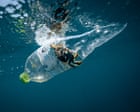
Community messages for OC
Share how OC's work has touched your life, ask questions, or offer help.