
Great White Shark
Apex predator of temperate coastal oceans
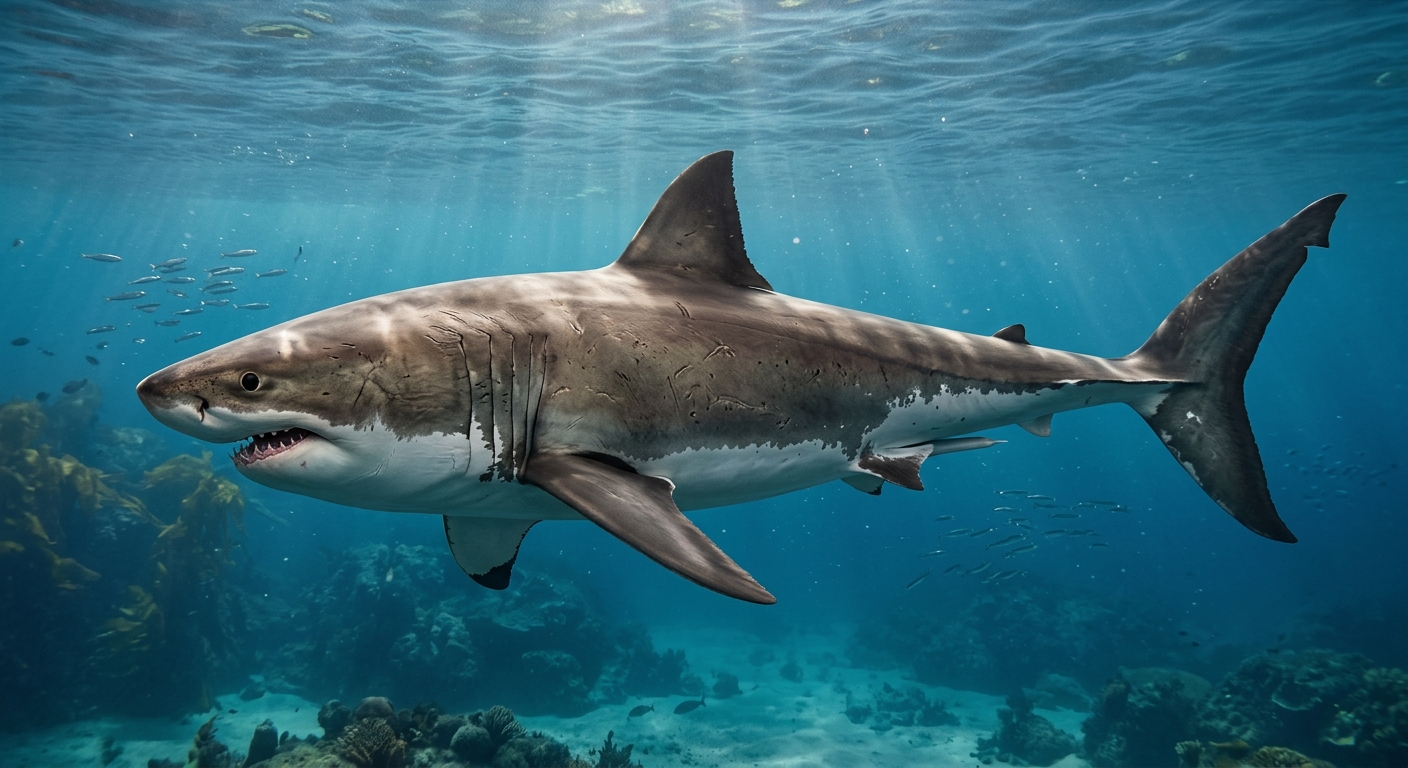
The great white shark is a large predatory shark found in coastal surface waters of all major oceans. Known for its size, powerful jaws, and iconic role as an apex predator, it is one of the most recognizable and studied sharks in the world.
Overview
The great white shark (Carcharodon carcharias) is the largest predatory fish in the ocean, reaching lengths of up to 6 meters or more. With a robust, torpedo-shaped body, conical snout, and distinctive coloration—dark gray to blue-gray dorsally and white ventrally—this species is perfectly adapted for hunting in open water. Great whites possess multiple rows of serrated, triangular teeth designed for gripping and tearing prey. As an apex predator, the great white shark plays a crucial role in marine ecosystems by regulating populations of seals, sea lions, and other marine mammals. These sharks are highly migratory, traveling thousands of kilometers between coastal hunting grounds and offshore areas. Despite their fearsome reputation, great white sharks are relatively rare and face numerous threats from human activities. Great whites are found in cool to temperate coastal waters worldwide, preferring areas with abundant prey populations. They are often associated with seal colonies and areas of high productivity. These sharks exhibit complex behaviors including breaching, social interactions, and sophisticated hunting strategies. Their ability to maintain body temperatures above ambient water temperature (regional endothermy) allows them to hunt efficiently in cooler waters.
How to identify
Large, robust shark with a conical snout and crescent-shaped tail. Distinctive counter-shading: dark gray to blue-gray or bronze on the dorsal surface and white on the ventral surface, with a clear demarcation line. Black eye and triangular, serrated teeth visible when mouth is open. Adults typically 3.5-6 meters in length, with females larger than males. First dorsal fin is large and triangular, positioned well forward on the body.
Habitat
Coastal and offshore waters, typically in temperate and subtropical regions. Prefers areas near continental shelves, island chains, and seal colonies. Found from the surface to depths of over 1,200 meters, though commonly observed in waters less than 250 meters deep. Frequents areas with rocky reefs, kelp forests, and offshore islands.
Distribution
Widespread in all major oceans, with highest concentrations in coastal waters of South Africa, Australia (particularly southern and western coasts), California, northeastern United States, Mexico (Guadalupe Island), the Mediterranean Sea, Japan, Chile, and New Zealand. Highly migratory, with individuals traveling between coastal and oceanic habitats.
Diet
Opportunistic carnivore feeding primarily on marine mammals including seals, sea lions, small cetaceans, and occasionally sea otters. Also consumes fish (including other sharks, rays, and bony fish), sea turtles, seabirds, and carrion such as whale carcasses. Juvenile great whites feed mainly on fish and smaller prey, shifting to marine mammals as they mature.
Behavior
Highly migratory, traveling vast distances between feeding and pupping areas. Known for spectacular breaching behavior when hunting seals, propelling their entire body out of the water. Exhibit curiosity toward novel objects and engage in investigative biting. Generally solitary but may aggregate at productive feeding sites, displaying complex social hierarchies. Capable of regional endothermy, maintaining elevated body temperatures for enhanced swimming performance and digestion.
Reproduction & life cycle
Ovoviviparous (aplacental viviparity), with embryos developing inside eggs that remain within the mother's body until hatching. Gestation period estimated at 11-18 months. Litter size ranges from 2-14 pups, typically 4-7. Pups are born at approximately 1.2-1.5 meters in length and are independent immediately after birth. Females reach sexual maturity at approximately 12-18 years, males at 8-10 years. Reproductive cycle is believed to occur every 2-3 years.
When to look
Present year-round in most regions, but show seasonal movements tied to prey availability. In many areas, more common in coastal waters during late summer and autumn when seal pups are abundant. Specific timing varies by region: South African coast (April-September), California coast (August-February), Mediterranean (summer months).
Cultural significance
Featured prominently in popular culture, particularly through the 1975 film Jaws, which shaped public perception of sharks as dangerous predators. Holds significance in various indigenous cultures, including Maori and Australian Aboriginal peoples. Increasingly important in ecotourism, with cage diving operations in South Africa, Australia, and Mexico. Subject of extensive scientific research and conservation efforts. Teeth and jaws have been collected as trophies and curios, contributing to population declines.
Similar species
- Shortfin mako shark (Isurus oxyrinchus)
- Salmon shark (Lamna ditropis)
- Tiger shark (Galeocerdo cuvier)
Watch on YouTube
Search YouTube for "great white shark hunting breach documentary"Share notes, corrections, or add local knowledge. Text · Images · Videos · Links.